
Jump to a section View topics
Quote the EV before you decide what you can afford
An electric car can change your fuel spending, maintenance routine and insurance bill in different ways. A lower charging cost does not establish a lower total ownership cost, and an expensive insurance quote does not mean every EV will produce the same result. Request quotes for the exact vehicles you are considering, using the same drivers, address, coverage selections and policy period.
The NAIC's July 2026 overview identifies vehicle value, specialized repairs, battery costs, parts availability and qualified repair facilities as potential insurance cost factors. That provides a useful shopping agenda, not a personal rate estimate. Ask the provider which details matter to your quote and what the proposed coverage actually includes. Do not apply a national average mechanically to a particular car in your driveway.
This guide focuses on practical U.S. insurance questions for new and used battery-electric cars and plug-in hybrids. It does not rank insurers by commissions or promise an available campaign in every state. GetInsuredUSA is an educational and referral publisher, not an insurer. A licensed provider determines eligibility and price, and the policy controls the protection you buy.
Why comparing exact vehicles beats comparing powertrains
“Electric versus gas” is often too broad to explain two insurance quotes. A small used EV and a new luxury gasoline SUV have many differences besides the power source. Trim, value, equipment and repair arrangements can complicate the comparison. Use the VIN when available and ask the insurer to confirm it identified the vehicle correctly before treating the number as useful.
If you are still choosing models, create one baseline covering household drivers, garaging location, use, liability limits and physical-damage deductibles. Apply it to each candidate. Mark any coverage option the provider cannot keep identical. That allows you to distinguish a vehicle-related price difference from one caused by selecting different protection, payment terms or optional benefits.
Save each quote with the vehicle, date, effective date and term. A screenshot showing only a monthly payment leaves too much missing. Ask whether verification remains outstanding and whether the quote can change when additional information is reviewed. A model-specific insurance estimate belongs in the purchase budget before the sales agreement, not as a surprise after you collect the keys.
Separate the battery warranty from auto insurance
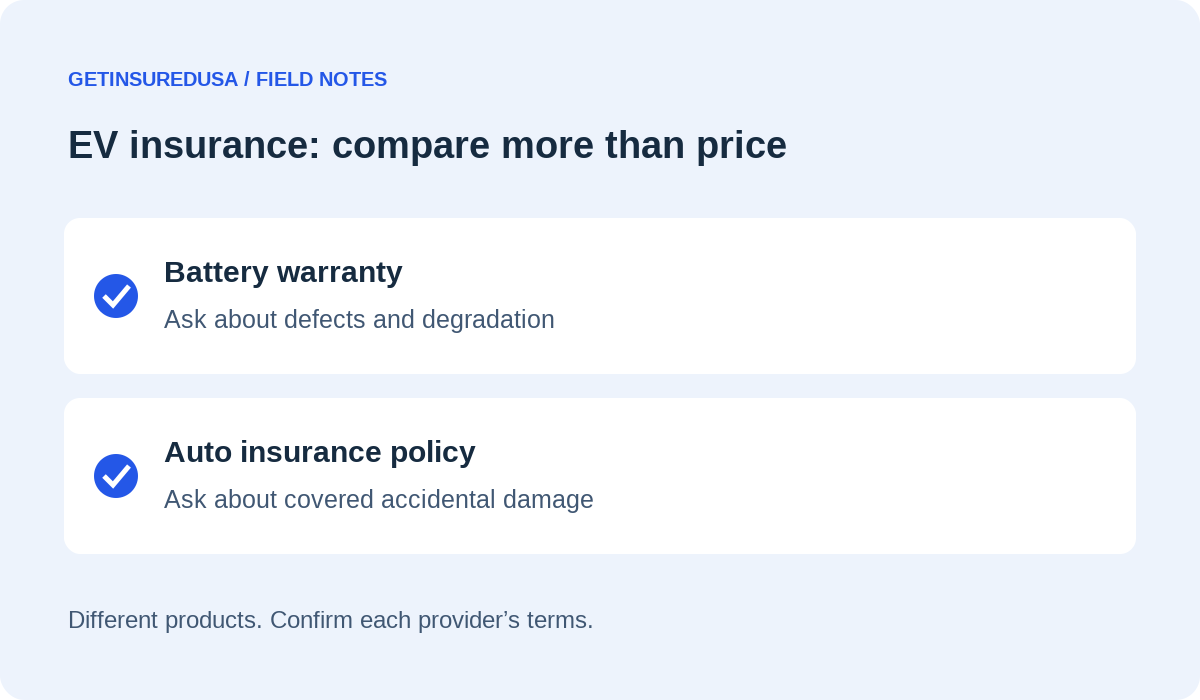
Ask the manufacturer or warranty provider what its battery protection covers and what conditions apply. Then ask the auto insurer how the policy treats accidental damage involving the battery. These are different products addressing different events. Ordinary degradation, a defect, road-impact damage and damage from a covered storm should not be grouped together under a casual promise that “the battery is insured.”
For a used EV, obtain the warranty information for that particular vehicle and check any transfer or eligibility conditions with the provider. An advertisement quoting the original new-car warranty does not confirm what remains. Keep the purchase inspection and available battery-health information separate from the insurance quote so you can identify which organization has answered which question.
If a seller offers a service contract, request its written terms and itemized price. Do not assume it expands the auto insurer's obligations. Our used-car insurance checklist helps organize the purchase sequence. Before paying for an additional product, identify the specific risk it addresses and whether you already have applicable protection elsewhere.
Comprehensive and collision still need separate decisions
An electric powertrain does not replace the basic distinction between collision and comprehensive. Collision generally concerns damage from hitting another car or object, while comprehensive generally addresses specified non-collision events such as theft or certain weather losses. Ask the provider to describe the actual coverage and exclusions for your vehicle rather than relying on an undefined “EV protection” label.
Record the two deductibles independently. If you raise one to reduce a quote, ask for an otherwise identical version so the savings can be measured. A financed or leased EV may be subject to lender requirements, including limits on deductibles. Check those requirements before dropping coverage or accepting a quote that appears inexpensive because a required benefit is missing.
Use our comprehensive guide, collision explanation and deductible guide to prepare questions. These resources cannot tell you the final settlement after an actual loss. Your provider needs the policy and circumstances, including the cause of damage, the selected benefits and any applicable endorsement, before it can explain how a claim would be evaluated.
Repair access is a useful insurance question
Ask which repair facilities near your home can work on the exact model and which can handle relevant battery or structural work. Then ask the insurer how repair-shop selection operates under the proposed policy. Do not assume an ordinary body shop, a manufacturer-certified facility and a network repairer have identical capabilities, availability or arrangements for your vehicle.
Consider the distance as well as the repair price. A specialized shop several hours away can raise transport and temporary-vehicle questions. Ask how towing, inspection and storage charges are handled after a covered loss. Keep the answers with the quote so they can be compared with a second provider's process. General assurances about a large repair network may not answer a model-specific problem.
You do not need to predict every repair before buying. Start with likely ownership needs: collision repair, windshield work, safe towing and a qualified inspection after damage. A provider willing to explain those arrangements clearly gives you information that a headline premium alone cannot supply. Verify any important representation through the actual policy or written provider guidance.
Cameras, sensors and windshield replacement
Some vehicles use cameras and sensors that need particular procedures after windshield replacement or other repairs. Ask the repairer about the vehicle manufacturer's requirements and whether calibration is included in the estimate. Ask the insurer how it evaluates those costs. A low glass-only quote may not describe the complete work needed to return the vehicle to appropriate operating condition.
Review any glass-specific terms in your policy. A repairable chip, full replacement and a separate glass option may have different deductibles or conditions. Do not assume a national advertisement applies to your state and policy. Keep the written explanation, particularly if you are choosing an insurer partly because of a promoted windshield benefit.
The windshield insurance guide provides a longer checklist. Describe existing damage accurately when buying or insuring a used vehicle. A new policy does not turn a crack that was already present into a newly occurring loss. Photographs, inspection records and repair documents help you keep the vehicle's condition clear from the start.
Ask about rental reimbursement before a repair delay
If your car is unavailable after a covered loss, rental reimbursement can matter more than the daily commute suggests. Ask whether it is selected, what limits apply and when the benefit begins and ends. Have the insurer explain how the allowance works if parts or repair appointments are delayed. Do not assume coverage continues indefinitely until your preferred repair date.
Also ask what kind of temporary vehicle the benefit provides. An allowance for transportation does not necessarily guarantee an electric replacement, a particular size or the same features as your own car. If your household needs child seats, accessibility features or space for work equipment, price the potential difference rather than assuming the benefit will match every requirement.
For a one-car household, plan the first few days as well as a longer repair. Could you use transit, work remotely or arrange a suitable rental while the claim is assessed? Keep those options in mind when comparing the premium for different limits. A small coverage difference may matter if you have no inexpensive way to stay mobile.
Charging equipment is not one automatic coverage category
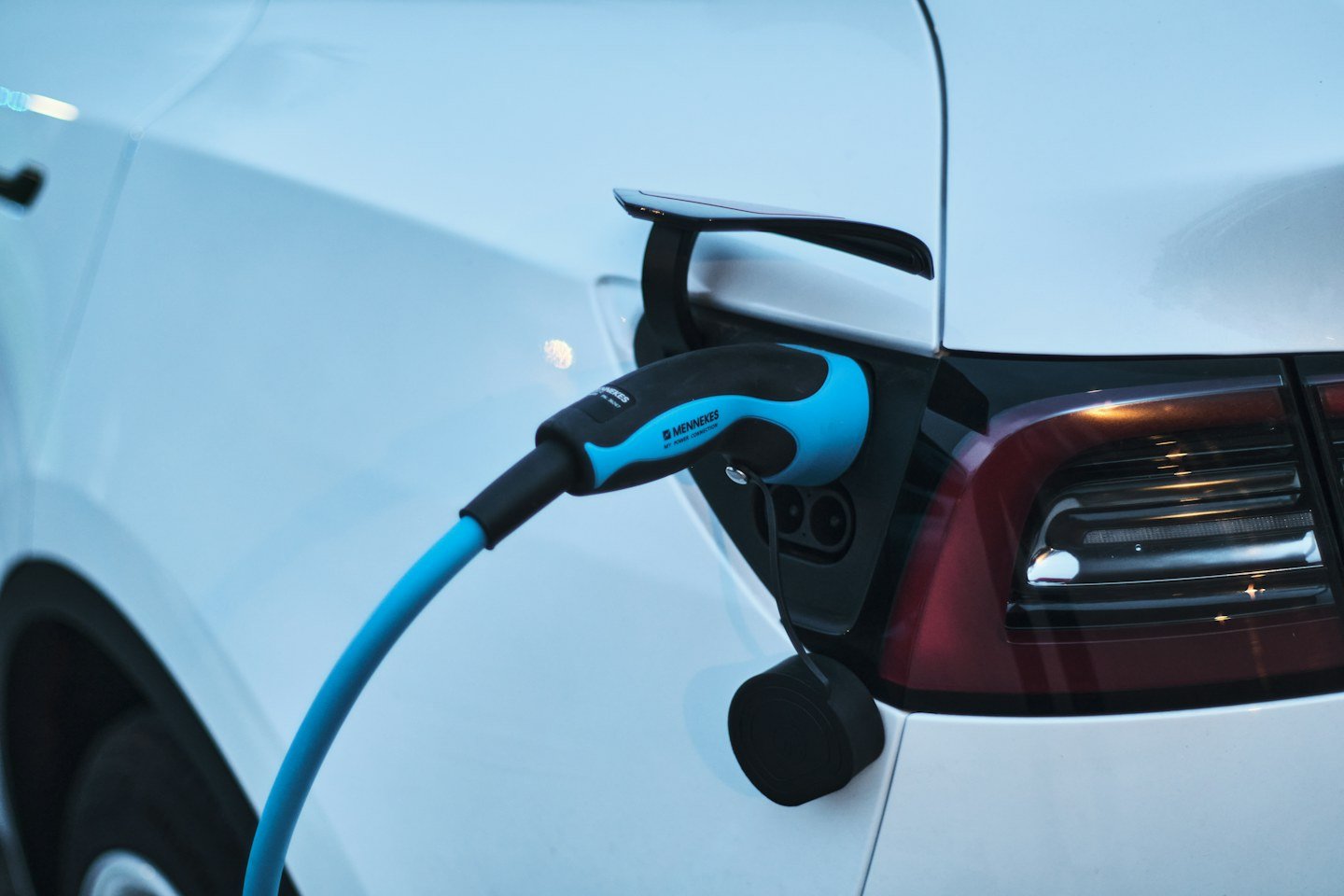
Ask separately about equipment carried in the car, a home charging unit and damage to the vehicle while charging. These involve different property, causes and potentially different policies. An auto insurance representative may need to coordinate a question with a homeowners or renters provider. The phrase “charger coverage” is too broad to confirm which object and event are insured.
Describe the equipment precisely: a portable cable, installed charging hardware or another accessory. Ask about applicable limits, deductibles, exclusions and whether any declaration or endorsement is needed. If you rent your home or use shared parking, clarify ownership and responsibilities before assuming that a building policy protects equipment you purchased or damage involving your vehicle.
Keep installation and purchase documentation where relevant, and follow qualified electrical and manufacturer guidance. Insurance does not replace safe installation or appropriate maintenance. This article does not promise that a particular policy covers charging equipment. The useful shopping action is to identify the item, describe the loss you worry about and have the responsible provider explain its contract.
Towing and roadside assistance need model-specific instructions
Ask how the car should be transported when it cannot move safely and where the official instructions are available. Different models can require different handling. Save the manufacturer's guidance and the insurer or roadside provider's contact information. During a breakdown, tell the dispatcher the exact model and circumstances rather than assuming a generic tow arrangement is suitable.
Review what your roadside benefit actually includes. Assistance after a depleted battery, a mechanical breakdown and an insured collision may be handled differently. Ask about distance or dollar limits and whether transport to a qualified facility is available. If the manufacturer or an automobile club already provides assistance, compare the benefits before paying for another product with a similar label.
For a road trip, check support along the route as well as near home. A familiar local repair arrangement may not help explain what happens several states away. Record the official process for requesting service and avoid authorizing expensive work through an unverified caller. GetInsuredUSA does not dispatch roadside assistance or collect fees to release claim benefits.
Water exposure and a damaged EV
After significant water exposure or a serious impact, prioritize safety and qualified guidance over trying to make the car run. Tell the insurer and responders what happened and identify the vehicle. Ask about inspection, storage and transport before taking actions that could create additional risk. A damaged high-voltage system is not a do-it-yourself troubleshooting project.
For insurance purposes, the cause of damage matters. Ask about comprehensive for relevant flood losses and collision for relevant impact losses, subject to the actual policy. Do not assume every problem appearing after rain is a covered flood claim. A factual timeline, photographs taken safely and professional inspection can help separate questions about cause from assumptions about coverage.
The winter car insurance guide discusses weather scenarios more broadly. Keep that preparation separate from the immediate response to a hazardous vehicle. A coverage question can be resolved through the insurer; an unsafe vehicle should be handled using appropriate emergency, manufacturer and repair-professional instructions for the circumstances.
Manufacturer insurance and telematics programs
A vehicle manufacturer may promote an insurance product or a driving-data program, but compare it with other written offers rather than assuming a brand match makes it best. Ask who issues the policy, where it is available, what protection is included and whether the price depends on a monitoring result. Check the insurer through the appropriate state resource.
Read the data terms before joining. Ask what is collected, how it affects pricing, whether an unfavorable result can increase the premium and how to leave the program. Connected-car data collection and your insurer's optional program may also be separate arrangements. Reviewing one set of permissions does not necessarily explain all data flows involving the vehicle.
Our pay-per-mile and telematics guide explains the distinction between distance-based charges, driving-score adjustments and ordinary low-mileage discounts. Compare the actual final price and conditions, not a maximum advertised savings figure. If privacy or predictable billing is important to your household, include it explicitly in the comparison alongside the premium.
Used EV value and total-loss questions
Ask how the insurer establishes vehicle value after a total loss and what optional valuation benefits, if any, are available. Do not assume the purchase price, outstanding loan and eventual insurance settlement will match. A used EV bought at a discount can still carry a financing balance that creates an uncomfortable difference after a serious loss.
If considering a gap product, have its provider explain exactly what it covers, limits, exclusions and how it interacts with the auto policy. Compare the itemized price and cancellation rules. Do not treat a dealer's mention of “loan protection” as a complete description. You need the product documents and an understanding of the particular shortfall it is designed to address.
Keep records of the car's condition, mileage, equipment and purchase documents. Ask how aftermarket additions or changes should be reported. A good record does not guarantee a particular settlement, but it gives you something concrete to discuss if vehicle details are wrong. If a valuation dispute arises, use the insurer's stated review process and state consumer resources where appropriate.
Build an ownership budget without double counting
Keep purchase price or loan payments, insurance, charging, registration, maintenance and repair reserves in separate rows. State the time period for each. A six-month insurance premium should not be mistaken for a full-year figure. If you compare a gasoline vehicle, use the same ownership period and realistic use assumptions so the result answers one consistent question.
Label estimates as estimates. Charging costs can depend on where and when you charge, while insurance renewals can change. A budget can still be useful without pretending each item is fixed forever. Include room for uncertainty, particularly if the purchase would leave little available cash for a deductible or an unexpected expense unrelated to an insured loss.
Revisit the budget when a quote, financing term or vehicle choice changes. Do not keep an old insurance figure because it makes the preferred car look affordable. The quote comparison guide helps maintain consistent selections; the broader ownership decision also needs the inspection, financing and household cash-flow information that an insurance website cannot determine for you.
A fictional EV versus hybrid shopping exercise
Suppose a household compares a used battery-electric hatchback and a plug-in hybrid. It obtains exact VINs and requests identical liability limits and physical-damage deductibles. One quote is cheaper, but the household notices that rental reimbursement was omitted from that version. It asks for a revision before deciding whether the difference comes from the vehicle or the missing benefit.
Next, the household checks nearby qualified repair options and manufacturer towing instructions for both cars. It asks the insurance providers about repair selection and transport. These answers do not produce a single numerical score, but they show which arrangements would be practical if the vehicle were damaged. The family records unresolved questions instead of filling the gaps with optimistic assumptions.
Finally, it checks the battery warranty, purchase inspection and financing requirements separately. The family compares the first policy term and a realistic deductible reserve with the money remaining after purchase. Its preferred car may still be the electric model, but the choice rests on documented costs and conditions rather than an assumption that fuel savings settle every ownership expense.
This exercise is not a claim that hybrids are always cheaper or that EV repairs always take longer. The result can vary by model, location, insurer and loss. Its purpose is to show a repeatable process: match coverage, confirm the vehicle, examine service arrangements and separate insurance promises from warranty and financing documents.
What to keep after an EV repair
Ask for an itemized invoice and documentation of relevant work, including calibration or inspections where performed. Save it with photographs, insurer correspondence and any manufacturer guidance supplied by the repairer. The point is to understand what was actually completed. A general statement that the car is ready does not give you the same record as documents describing the repair and checks.
If a warning appears after collection, contact the appropriate repair professional and insurer promptly. Explain the symptom and when it began without guessing at a diagnosis. Ask whether the vehicle should be driven and how further inspection should be arranged. Do not keep driving an unsafe car while trying to determine which organization may eventually pay for the issue.
For warranty questions following repairs, consult the warranty provider's actual terms. The insurance claim and warranty review can involve separate decisions. Preserve a factual record so each organization can evaluate the work and circumstances. Avoid accepting a broad verbal claim about all future warranty coverage without asking the responsible provider to identify what it means for your particular vehicle.
Comparing renewal with the original EV quote
When renewal arrives, line it up with the previous declarations and price. Check changes in selected coverages, deductibles, vehicle details, mileage and fees before concluding that the electric powertrain alone explains the difference. Ask the provider to separate factual updates, program adjustments and other rate changes where it can. A clear explanation helps you decide whether to shop again or correct an error.
If the car's financing arrangement changed, ask whether the lender information needs updating. If your driving changed, report it accurately and discuss appropriate pricing options. A paid-off car can give you more flexibility, but do not remove physical-damage protection solely because the loan ended. Consider the vehicle's current value and what replacing it would mean for your budget.
Request competing quotes on a consistent basis if you decide to compare. Include the same optional benefits you now know matter, such as temporary transportation or particular deductible choices. Experience with the car can make your second comparison better than your first: you know its use, repair access and household role. Keep those practical needs visible rather than starting over with only an advertised monthly price.
Questions EV shoppers ask
Are electric cars always more expensive to insure?
Not every comparison will produce that result. Ask for quotes on the actual vehicles using the same coverage and driver information. Broad averages can reflect different models and assumptions. They cannot tell you the premium for a specific EV or establish that one insurer is cheapest for every driver in every state.
Does auto insurance replace a worn-out battery?
Do not assume it does. Ask about the cause and the policy, and review warranty terms separately. Wear, degradation, defects and accidental damage are different questions. A seller's description of battery protection needs to identify the provider and terms. Have each organization explain its own obligations before relying on the statement.
Should I choose the highest deductible to lower the price?
Compare the actual premium difference with the extra amount you could owe after a covered loss. Check lender requirements and available savings. The largest deductible is not automatically the best choice if paying it would make repairs unaffordable. Keep comprehensive and collision amounts separate and obtain matching quote versions before deciding.
Does an EV quote include charging equipment?
Ask explicitly. Portable equipment, installed home hardware and the car itself may raise different coverage questions. Identify the property and the event, then have the auto or home insurer explain the relevant contract. Do not infer coverage from a general EV label or assume another property owner's policy protects your equipment.
Sources and the next step
Research checked November 26, 2026: NAIC electric vehicle insurance overview, updated July 2026, NAIC auto coverage resource, NAIC telematics overview, and Maryland connected-car data guidance. These sources provide context; quotes and contract terms must come from the relevant provider.
Before buying, request two model-specific quotes and write down one unresolved repair, battery or data question for each car. Carry those questions to the insurer and seller while you still have time to compare alternatives. Our state guides help you locate official consumer resources, and our coverage overview can help you keep the comparison consistent.